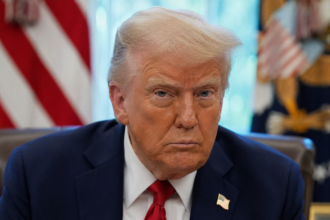


WASHINGTON — U.S. President Donald Trump threatened military action against Oman, declaring the Gulf nation must “behave” or face being blown up after reports emerged that Muscat was negotiating with Tehran to jointly control commercial shipping through the Strait of Hormuz. Speaking during a White House cabinet meeting, Trump rejected any proposal that allows local regional powers to regulate or levy transit tolls on the strategic waterway.
The diplomatic friction underscores Oman’s delicate position as a primary backchannel mediator while geographically sharing sovereignty over a maritime passage that handles 20 percent of global oil traffic.
The Core Conflict Over the Strait
The immediate tension stems from an unofficial framework reported by Iranian state television regarding maritime traffic rules.
The Proposed Toll System: Iranian Foreign Minister Abbas Araghchi stated that the Strait of Hormuz consists entirely of Iranian and Omani territorial waters. Tehran has sought to impose mandatory transit fees and demand nationality disclosures from passing commercial ships.
The U.S. Red Line: The Trump administration has maintained a naval blockade on Iranian ports since active hostilities escalated in February. The White House stated it will reject any permanent maritime solution that yields tolling authority to Iran, viewing it as a protection scheme.
Trump’s Direct Warning: When asked by reporters if he would tolerate a temporary joint management agreement between Muscat and Tehran, Trump stated that the waterway is international waters. “Oman will behave just like everybody else, or we’ll have to blow ’em up,” Trump said.
Why Oman is Caught in the Middle
Oman’s unique foreign policy model has left the sultanate vulnerable to the ongoing conflict between Washington and Tehran.
The Neutral Mediator Role: For decades, Muscat has acted as the primary diplomatic bridge between Western powers and Iran. It hosted the initial, secret talks that led to previous nuclear frameworks and has been facilitating current ceasefire negotiations.
Geographic Vulnerability: The Omani exclave of Musandam sits directly across from Iran at the narrowest point of the Strait of Hormuz. Because the natural shipping channels run directly through Omani and Iranian territorial seas, the kingdom cannot easily separate itself from security updates in the channel.
Security Crossfire: Unlike its neighbors, Oman does not host major operational U.S. military bases. Despite its neutrality, the country was dragged into active hostilities earlier in the war when Iranian drones and missiles struck energy facilities at Oman’s Duqm commercial port.
While some regional analysts and media outlets speculated that the U.S. President may have misspoke by naming Oman instead of Iran, the White House has declined to issue a correction. State Department officials later reinforced the statement by warning that any country participating in maritime tolling mechanisms with Tehran faces severe economic sanctions.