

Trump rejects peace deal, keeps blockade in place amid high tensions.
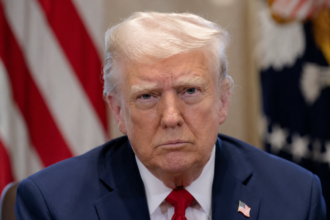
President Trump rejects Iran’s 14-point peace proposal, sending shockwaves as the crisis in the Middle East continues and tensions escalate dramatically, in what was described by White House insiders as an abrupt late-night rejection that dashed any hopes of an imminent peaceful resolution to the conflict. It was confirmed by the White House just after 12:13 am EST on Monday 4th May 2026 that Washington was “not stepping down” but was instead likely to increase its pressure on Tehran, which has already been subject to a crippling ‘Economic Fury’ campaign led by the US and allies.
The confirmation of this devastating rejection came at approximately 10:15pm Sunday night, just a day after Iran and the US announced an extended three week truce; an event which many believed would be the catalyst that would signal the reopening of the heavily militarized and strategic Strait of Hormuz.
The Sticking Point and why the deal was shot down.
The Iranian proposal, submitted to the White House via Pakistani mediators, gave a 3-point plan which offered a 30 day roadmap to end the war and hostilities between the US and Iran. However according to President Trump himself who addressed reporters, and later posted a message on Truth social media the deal had two significant sticking points.
The core issues were:
Iran has not ‘paid enough of a price’ as stated by President Trump who made it abundantly clear that ‘a price has to be paid’ for 47 years of hostilities and that only a complete dismantling of its nuclear capabilities-not just a 15 year enrichment ban-would even be considered by the U.S.
Hormuz will remain closed until nuclear negotiations, an initial demand from the U.S., has begun and with it, until Iran has ceased its “economic Strangulation” of the US, as labeled by Treasury Secretary Scott Bessent who said that the current blockade by the US Navy was “choking Iran”.
Negotiations only to commence following the cessation of hostilities were rejected outright.
The impact on the ground.
Currently as this story goes to print the Strait of Hormuz remains completely blocked to all commercial and military traffic. Seven OPEC + nations have reportedly been compelled to increase their output targets, but there is nowhere for them to effectively export their petroleum, as Bloomberg reports maritime traffic has “ground to an almost complete halt”.
Meanwhile back in the US the administration is facing scrutiny and public anger over an assassination attempt on the President on April 25 th , it was confirmed on Sunday evening by federal investigators that a Secret Service agent was indeed hit by buckshot from a Mossberg shotgun, effectively disproving earlier speculations about ‘friendly fire’. This added another layer of difficulty to President Trumps handling of the ongoing crisis, with security measures around him at their most intense levels.
The significance of this development.
With the continuing closure of the Strait of Hormuz, Somalia is expected to experience sustained high global and local prices for oil and energy. The increase in piracy incidents off the coast of Puntland noted by the UKMTO mere hours ago could be a result of local militias exploiting the resources, resources that would typically be diverted to combatting an Iran-escalated conflict in the region, that now instead remains a potential future possibility and threat in the Red Sea.