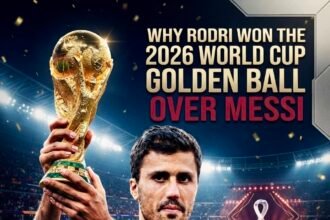


NEW YORK (Sports Desk) — Massive digital friction and public division have erupted across major social media channels following FIFA’s decision to award the 2026 World Cup Golden Ball to Spain’s captain and midfielder, Rodri. The announcement, made by the tournament’s Technical Study Group after Spain’s 1-0 extra-time final victory at MetLife Stadium, has provoked fierce tribal arguments between competing football fanbases online.
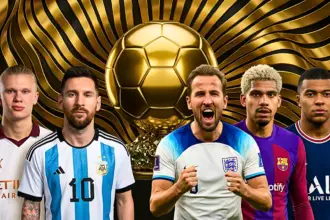
A highly vocal faction of supporters has publicly accused FIFA of systematically denying Argentina captain Lionel Messi a record-breaking third Golden Ball to appease rival fanbases, specifically followers of Cristiano Ronaldo. These fan groups argue that Messi’s overall tournament volume of eight goals and four assists should have automatically secured the individual accolade. They allege that football’s governing body selected the Manchester City midfielder as a safe, neutral choice to avoid accusations of favoritism or rigging.
Major Publishers Document the Backlash
Prominent sports news organizations have dedicated significant post-match coverage to the escalating online discourse. Reports compiled by Yahoo Sports highlight that many fans are deeply fuming over what they perceive as a historic tournament snub. The network notes that because scoring and assisting are traditionally the decisive factors for voters, bypassing a player with 12 goal involvements in favor of a defensive midfielder has severely damaged FIFA’s credibility among casual viewers.
Similarly, analytical coverage from Sky Sports noted a stark division between raw data and administrative choices. According to Sky Sports’ official internal Power Rankings, which mathematically assess 43 separate performance statistics, Messi, Kylian Mbappé, and Jude Bellingham ranked as the top three individual performers of the entire World Cup cycle, respectively. Rodri, by contrast, finished 18th on that purely statistical ladder, fueling the public perception that the “best team” was awarded the individual prize rather than the objective “best player”.
Verdict From Professional Reporters and Analysts
The professional football media has split directly down the middle, with television pundits and tactical writers heavily debating the validity of the decision. While some praised the normalization of rewarding defensive players, others argued that tournament history had been altered by a narrative vote.
The Case for Tactical Value: Writing for The Athletic, senior football correspondents argued that Rodri’s impact transcends basic box-score metrics. They noted that his performance in the final was a clinic in structural containment, systematically cutting off the passing lanes between Enzo Fernández and Messi. Pundits on ESPN FC echoed this sentiment, stating that rewarding the brain of the world-champion squad was a victory for football purists who value control over viral highlights.
The Attack on Individual Logic: Conversely, former England international and prominent television pundit Gary Lineker expressed severe skepticism during his live broadcast, arguing that the Golden Ball is legally designed to honor individual performance rather than collective squad strength. Lineker stated that while Spain was clearly the best collective unit, no single player matched the sustained individual volume that Messi carried into the final stage of the competition.
Fan Comments and Social Media Posts
The digital landscape across platforms like X (formerly Twitter), TikTok, and Facebook has split into deeply entrenched, opposing camps. An analysis of trending posts reveals the specific arguments driving the viral backlash:
The “Robbed” Narrative: Pro-Messi communities have flooded comment sections with claims of administrative corruption. Phrases such as “This is an absolute nonsense, Rodri didn’t deserve to win it” and “How much bribe does one normally pay to receive those awards?” have garnered tens of thousands of interactions.
The “Ronaldo Fan Appeasement” Theory: Multi-million-view threads on X baselessly assert that FIFA President Gianni Infantino feared an internet collapse if Messi won another individual prize over Ronaldo. Fans wrote, “FIFA chose a midfielder with zero goals just so they wouldn’t have to face the Ronaldo fanbase crying about rigging for the next four years.”
The Counter-Critique: Conversely, rival fanbases have used Argentina’s lackluster final performance to mock the outrage. Supporters of the decision pointed out that Argentina became the first team in final history to fail to register a single shot during the 90 minutes of regulation time. Viral comments read, “Imagine demanding a Golden Ball for a ghost who didn’t take a single shot in 90 minutes. Rodri completely owned the pitch.”
The Technical Justification Behind the Vote
While social media continues to treat the accolade as a popularity contest, technical experts have defended the decision based on tactical control. According to official data published by FIFA, Rodri completed 101 of 105 attempted passes and won 80 percent of his individual duels during Sunday’s final match alone.
The Technical Study Group heavily weighted Rodri’s role as the single pivot for a Spanish side that conceded only one goal across eight matches, keeping seven clean sheets en route to the title. While the tactical defense of Rodri remains statistically sound, the head-to-head clash of football philosophies ensures that the digital fallout will remain a highly contentious talking point for the remainder of the summer.