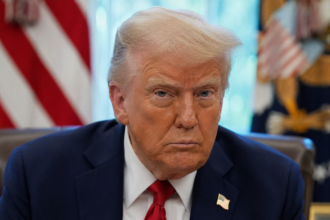


As Thursday dawned in Tehran and the Persian Gulf, an Iranian Revolutionary Guard Corps (IRGC) launched a daunting fleet of 342 fast-attack boats into the Strait of Hormuz, the strategic chokepoint that the President is visiting Beijing for on Thursday.
The Current Escalation
According to real-time maritime intelligence from Windward AI and reports confirmed within the last hour, the IRGC has tightened its grip on the world’s most critical energy chokepoint. While the count is slightly down from yesterday’s peak of 454 vessels, the current deployment of 342 boats remains significantly above the historical average of 30 to 200.
Large operational sphere: Iran has claimed, and on record, extended the notion of the Strait by describing its “operational zone” as being “200-300 miles in width from Jask in the east to east of Greater Tunb”.
U.S. Naval Response: U.S. Central Command (CENTCOM) acknowledged that it had to use small-arms warning shots earlier in the week to “assert the blockade of Iranian ports and prevent unlawful diversions of commercial vessels”.
Shipping Gridlock: Hundreds of commercial tankers are currently “going dark,” switching off transponders and radar systems to avoid detection as they navigate what is being described as a “controlled passage” system dictated by Tehran.
Official Statements
“The Strait is no longer viewed as a narrow stretch around a handful of islands but instead has been greatly enlarged in scope and military significance,” stated Mohammad Akbarzadeh, Political Deputy of the IRGC Navy, in a televised address.
The White House has dismissed Iran’s claims of control as a desperate move. Anna Kelly, White House Deputy Press Secretary, stated:
“The Iranian regime is being strangled economically by Operation Economic Fury, losing $500 million per day. President Trump holds all the cards as negotiators work to make a deal.”
Market and Economic Impact
The standoff is having a direct and immediate impact on the global economy:
Oil Prices: Crude futures remain volatile as the “Hormuz Toll” and rerouting of tankers increase transportation costs.
Shipping Insurance: Insurance premiums for vessels transiting the Persian Gulf have spiked to record highs this morning.
Inflation: The Bureau of Labor Statistics (BLS) notes that over 40% of recent price advances in global goods are attributed to rising energy costs directly linked to the Middle East conflict.
Why This Matters
The 75-day-old war between the U.S.-Israeli alliance and Iran has entered a new, more dangerous phase. For our readers, this isn’t just a military story—it’s a global economic trigger. The blockade of the Strait of Hormuz, which typically carries 20% of the world’s oil and LNG, threatens to stall the global recovery and further fuel inflation in the United States and Europe.
What to Expect Next
The world awaits what takes place in Beijing over the next few hours, when President Trump meets with Chinese President Xi Jinping to talk about the issue concerning Iran. China, the largest consumer of oil through Hormuz, cannot stand on the sidelines. However, Tehran’s refusal to back down from its “right” to uranium enrichment suggests that the naval deadlock in the Gulf is unlikely to ease before the weekend.