



Have you ever experienced what it feels like to be part of a jigsaw puzzle with pieces missing? In an ever changing world where values fluctuate more like the weather and stress feels like the ever-present rain cloud, we are desperately seeking for stability. A framework is searched for, one that does not just dictate what we should do but explains why.
- The Five Pillars Today: Why do they matter?
- The Master Hadith: The Foundation of the Pillars
- 1. Shahada: The Declaration of Faith
- 2. Salah: The Five Daily Prayers
- 3. Zakat: The Obligatory Charity
- 4. Sawm: Fasting in the Month of Ramadan
- 5. Hajj: The Pilgrimage to Makkah
- Practical Lessons for Modern Muslims
- Common Mistakes Muslims Make
- Conclusion: The House of Peace
- 📌 Your Action-Based Ending
And for the more than 1.8 billion people in the world, that structure is in the Five Pillars of Islam (Arkan al-Islam). These aren’t merely worship acts; they’re the “spiritual DNA of a Muslim.” Imagine they’re the five weight-bearing pillars of a grand structure, whose if one weakens, the entire building leans, whose if all five are strong, the building remains strong through all the winds of adversity.
In this entire guide, we will analyze the five pillars with proofs from the Qur’an and the Sunnah and how they serve as a map to success in this worldly life and in the hereafter.
The Five Pillars Today: Why do they matter?
In today’s fast-paced, notification-filled, pressure-cooked world, the five pillars serve as a spiritual reset button that provides:
- Consistency: Prayer keeps us grounded five times a day.
- Social Justice: Zakat ensures the poor are not forgotten.
- Self-Discipline: Fasting teaches us to control our impulses.
- Equality: Hajj reminds us that no race or status is superior to another.
- Purpose: The Shahada defines our existence.
The Master Hadith: The Foundation of the Pillars
The concept of the “Five Pillars” comes directly from the words of the Prophet Muhammad ﷺ.
Authentic Hadith Evidence:
Abdullah ibn Umar (RA) reported that the Messenger of Allah ﷺ said:
بُنِيَ الإِسْلاَمُ عَلَى خَمْسٍ شَهَادَةِ أَنْ لاَ إِلَهَ إِلاَّ اللَّهُ وَأَنَّ مُحَمَّدًا رَسُولُ اللَّهِ وَإِقَامِ الصَّلاَةِ وَإِيتَاءِ الزَّكَاةِ وَالْحَجِّ وَصَوْمِ رَمَضَانَ
“Islam is built upon five: To testify that none has the right to be worshipped but Allah and Muhammad is the Messenger of Allah, to establish prayer, to pay Zakat, to perform Hajj, and to fast the month of Ramadan.”— (Sahih al-Bukhari, 8; Sahih Muslim, 16)
1. Shahada: The Declaration of Faith
The first and most important pillar is the Shahada. It is the gateway to Islam. Without the Shahada, the other four pillars have no spiritual weight.
- Arabic Text: أَشْهَدُ أَنْ لَا إِلَهَ إِلَّا اللهُ وَأَشْهَدُ أَنَّ مُحَمَّدًا رَسُولُ اللهِ
- Meaning: “I bear witness that there is no god but Allah, and I bear witness that Muhammad is the Messenger of Allah.”
Why it’s powerful:
The Shahada is a revolution of the soul. By saying “La ilaha illAllah,” you are declaring your independence from all false masters—money, ego, or people. You are acknowledging that only the Creator deserves your ultimate devotion.
2. Salah: The Five Daily Prayers
If the Shahada is the heart of Islam, Salah is its heartbeat. It is the direct connection between the slave and the Master.
Quranic Evidence
Allah (SWT) says:
إِنَّ الصَّلَاةَ كَانَتْ عَلَى الْمُؤْمِنِينَ كِتَابًا مَّوْقُوتًا
“Indeed, prayer has been decreed upon the believers a decree of specified times.”— (Surah An-Nisa, 4:103)
The Five Prayers:
- Fajr: Before sunrise (A test of discipline).
- Dhuhr: At noon (A break from work).
- Asr: Afternoon (A reminder during the busy hours).
- Maghrib: After sunset (A moment of gratitude).
- Isha: Night (A peaceful conclusion to the day).
Salah is not a “chore”; it is a meeting. Imagine the Creator of the Heavens and the Earth inviting you to a private audience five times a day. How could we turn that down?
3. Zakat: The Obligatory Charity
Islam is not just about the individual; it is about the community. Zakat is the third pillar, requiring Muslims to give 2.5% of their qualifying wealth to the poor and needy.
The Philosophy of Zakat:
The word “Zakat” literally means “to purify” or “to grow.” By giving away a small portion of your money, you are purifying the rest of your wealth and your heart from greed.
Quranic Evidence
وَأَقِيمُوا الصَّلَاةَ وَآتُوا الزَّكَاةَ وَارْكَعُوا مَعَ الرَّاكِعِينَ
“And establish prayer and give Zakat and bow with those who bow [in worship and obedience].”— (Surah Al-Baqarah, 2:43)
4. Sawm: Fasting in the Month of Ramadan
Fasting is the ultimate exercise in self-control. For 29 or 30 days every year, Muslims abstain from food, drink, and marital relations from dawn until sunset.
Why do we fast?
It isn’t just about hunger. It is about Taqwa (God-consciousness). When you can say “no” to water which is permissible (halal), it becomes much easier to say “no” to sins which are forbidden (haram).
Quranic Evidence
يَا أَيُّهَا الَّذِينَ آمَنُوا كُتِبَ عَلَيْكُمُ الصِّيَامُ كَمَا كُتِبَ عَلَى الَّذِينَ مِن قَبْلِكُمْ لَعَلَّكُمْ تَتَّقُونَ
“O you who have believed, decreed upon you is fasting as it was decreed upon those before you that you may become righteous.”— (Surah Al-Baqarah, 2:183)
5. Hajj: The Pilgrimage to Makkah
The final pillar is the Hajj, the pilgrimage to the House of Allah in Makkah. It is mandatory once in a lifetime for those who are physically and financially able.
The Symbolism of Hajj:
During Hajj, millions of people from every corner of the globe wear the same simple white cloth (Ihram). Kings stand next to laborers. There is no nationalism, no racism, and no classism. It is a dress rehearsal for the Day of Judgment.
Quranic Evidence
وَلِلَّهِ عَلَى النَّاسِ حِجُّ الْبَيْتِ مَنِ اسْتَطَاعَ إِلَيْهِ سَبِيلًا
“And [due] to Allah from the people is a pilgrimage to the House—for whoever is able to find thereto a way.”— (Surah Ali ‘Imran, 3:97)
Practical Lessons for Modern Muslims
- Balance: The pillars cover the physical (Salah/Sawm), the financial (Zakat), the verbal (Shahada), and the spiritual (Hajj). Islam is a holistic way of life.
- Discipline: You cannot “feel like” praying; you simply pray. This builds a grit and resilience that helps you in your career and personal life.
- Empathy: Fasting and Zakat make it impossible to ignore the suffering of the hungry.
Common Mistakes Muslims Make
- Treating them as “Checklists”: Many pray Salah with their bodies, but their minds are on their phones. The goal is Khushu (focus).
- Neglecting the Order: Some people focus on Hajj but don’t pray their daily Salah. The pillars are an integrated system; you cannot pick and choose.
- Zakat Miscalculation: Zakat is a precise calculation (2.5%). Many people just give “random charity” and think it counts as Zakat. It doesn’t.
- Fasting but not Praying: The Prophet ﷺ said that if someone doesn’t give up false speech and bad behavior, Allah has no need for them to give up their food and drink.
Conclusion: The House of Peace
Imagine a house. The Shahada is the ground you build on. Salah is the walls that protect you. Zakat is the plumbing and electricity that serves others. Sawm is the roof that shields you from the heat of temptation. And Hajj is the grand door that connects you to the history of all prophets.
When you commit to these five, you aren’t just performing rituals. You are building a fortress for your soul. You are ensuring that no matter how chaotic the world becomes, you have a “House of Peace” (Dar-us-Salam) within your own heart.
📌 Your Action-Based Ending
Don’t just read about the pillars—strengthen them today!
- For Salah: If you aren’t praying all five, start with one today and don’t miss it for a week.
- For Zakat: Use a Zakat calculator online to see if you owe anything.
- For Shahada: Renew your faith right now. Say: La ilaha illAllah, Muhammadur Rasulullah with sincerity.
May Allah (SWT) make us among those who establish the pillars of Islam with excellence and sincerity. Ameen!





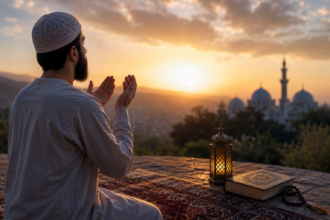

. These are not just religious rituals; they are the "spiritual DNA" of a Muslim. Think of them as the five weight-bearing columns of a magnificent building. If one is weak, the structure leans. If they are all strong, the building stands tall against any storm.)