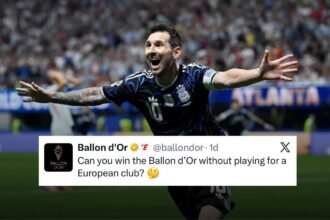


PARIS (Sports Desk GG) — The administrative organizers of the Ballon d’Or have issued a formal statement confirming that winning the FIFA World Cup does not automatically guarantee a player the prestigious annual individual accolade. In an official briefing published on the award’s digital portal, the committee clarified the specific operational rules that the 100 international journalists must follow when casting their votes.
The immediate public clarification follows intense global debate regarding the frontrunner status of Lionel Messi, Lamine Yamal, and Rodri, following the conclusion of the tournament in North America. According to data released by France Football, there have been exactly seven World Cup tournament cycles since the prize expanded to an entirely global format in 1995. Across those seven editions, only four world champions successfully went on to claim the trophy in the same seasonal cycle, establishing a narrow 57 percent historic success rate.
The statement reads:
“Winning the World Cup does NOT guarantee winning also a Ballon d’Or. Since 1995, four out of seven have managed to win a Ballon d’Or after the World Cup win — it’s only 57%. Yes, winning the World Cup helps, but it does not guarantee a Ballon d’Or. To win it, you need to have been the best player of the season, not only of the World Cup.”
The official directive explicitly cautions the international media block against using an isolated four-week international campaign to completely erase full-season club metrics. According to the regulatory guidelines, a nominee must prove they were the absolute best individual performer across the entire 12-month calendar season, rather than relying solely on international tournament silverware. This explicit structural reminder is intended to keep the point margins anchored to sustained, long-term athletic output.
Ballon d’Or Success Rate in World Cup Years
Historical correlation between winning the World Cup & winning the Ballon d’Or (Since 1995)
The four players who successfully executed the World Cup and Ballon d’Or double within the modern tracking framework are Zinedine Zidane, Ronaldo Nazário, Fabio Cannavaro, and Lionel Messi. Conversely, the three cycles where a world champion was bypassed occurred in 2010 when Messi won over Spain’s Andrés Iniesta, 2014 when Cristiano Ronaldo won over Germany’s Manuel Neuer, and 2018 when Luka Modrić won the trophy despite Croatia falling to France in the tournament showpiece.
Under the current voting handbooks, journalists are mandated to evaluate all 30 shortlisted nominees using three distinct, unweighted criteria pillars. The primary pillar remains individual performance and decisive on-field character in high-pressure matchups. The secondary consideration focuses on collective team achievements and major trophies won during the active season, while the final metric demands strict adherence to on-field class and the fair play code.
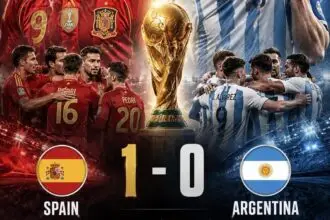
By releasing this data immediately after Spain’s victory over Argentina, the committee has effectively leveled the playing field for candidates who suffered international elimination but maintained immense seasonal volume. Analysts confirm that this open layout prevents the ballot from becoming a single-candidate race, forcing jurors to carefully weigh Lamine Yamal’s double-competition success, Harry Kane’s 61-goal club output, and Rodri’s tournament MVP metrics when the electronic system activates in August.