

MOGADISHU (GG) — Somali President Hassan Sheikh Mohamud has formally rejected assertions by the European Union that his administration is blocking the repatriation of its citizens, following the bloc’s decision to restrict Schengen visa rules for Somali nationals.
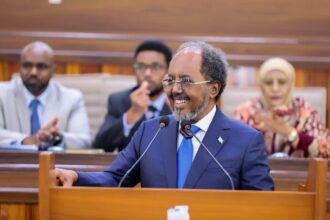
Speaking during an Independence Day commemoration address in the capital, Mogadishu, President Mohamud clarified that the ongoing dispute with European authorities does not stem from a refusal to accept returnees. Instead, the president emphasized that the federal government is demanding strict identity verification measures to ensure that individuals slated for deportation are legally and verifiably Somali nationals before they are processed.
The presidential rebuttal follows a formal directive by the European Council to temporarily tighten visa provisions for Somali passport holders. The European Commission concluded that Mogadishu’s institutional cooperation on readmitting its citizens staying irregularly across EU member states remained insufficient. Under the new restrictive framework, European member states have suspended the issuance of multiple-entry visas, terminated fee waivers for diplomatic and service passport holders, and extended the standard application processing window from 15 to 45 calendar days.
President Mohamud pushed back directly against the European characterization, describing the narrative that Somalia rejects its own people as inaccurate. He maintained that the federal government carries a constitutional obligation to verify the true lineage and documentation of anyone deported to the country, as foreign entities have previously attempted to deport non-Somali nationals to Mogadishu under fraudulent pretenses.
The diplomatic friction introduces a new layer of complexity to Somalia’s foreign relations as the federal government simultaneously navigates severe domestic political turbulence and regional security adjustments. The tightening of visa rules has sparked immediate concern among the country’s civil society, business community, and political elite, many of whom rely heavily on international travel for commerce, governance, and education.
European Union officials stated that the visa restrictions are intended to be temporary and will remain under close review. The bloc indicated that future adjustments to the Schengen travel framework remain entirely contingent on measurable improvements in bilateral cooperation regarding migrant readmission procedures.