The U.S. Army postponed the planned detonation of degraded lead azide at the Iowa Army Ammunition Plant from Friday to Monday, Nov. 23, it announced on Thursday.
Lead azide is a primary explosive used to set off munitions, and the Army says the 68 barrels stored at the plant in Middletown cannot be moved safely.
Army Secretary Adam Telle directed Army Materiel Command to postpone the work, according to ABC News. The Army had not announced a time for Monday.
Telle called Monday the “latest possible moment prior to a forecasted temperature drop,” which could further destabilize the material, according to a statement he posted on social media, as quoted by ABC News. “Public safety is the Army’s top priority,” he said.
What the Army had planned
An advisory from U.S. Army Sustainment Command set two rapid, consecutive detonations for about noon on Nov. 20. ABC News said they would take place inside concrete, earth-covered magazines, at about noon Central time.
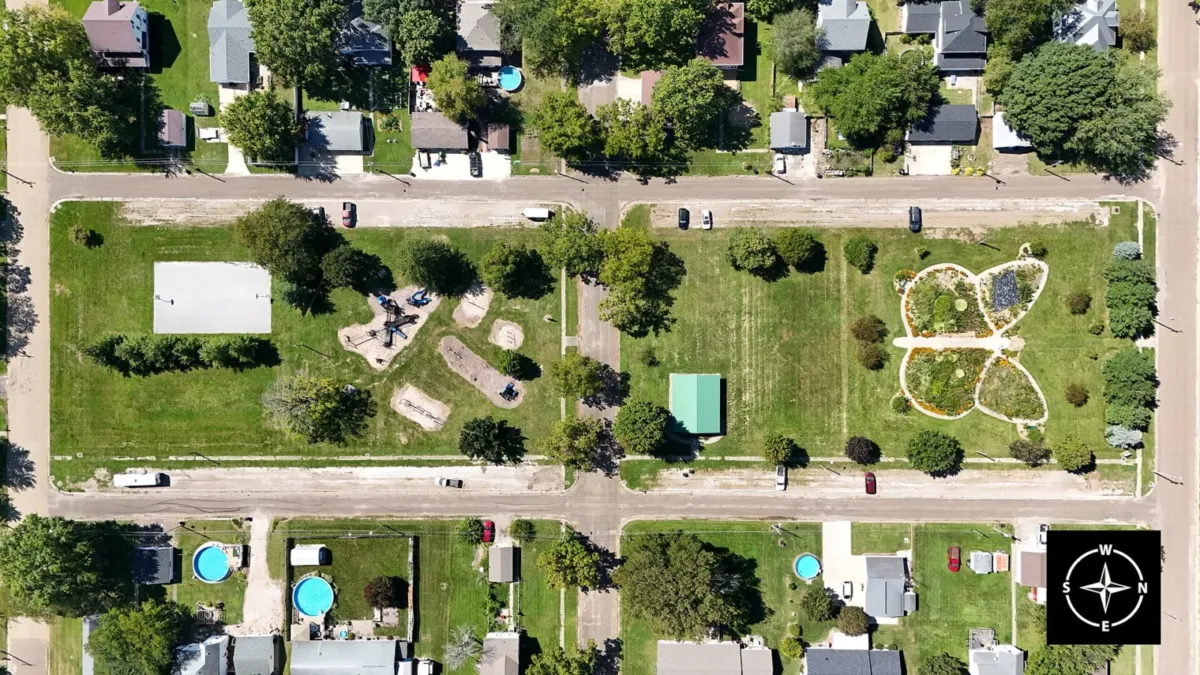
The Army had advised residents of the Middletown City Park neighborhood to leave for several hours, and updated guidance was pending, according to ABC News. The outlet said the advisory also covered the Butterfly Park area. A shelter was planned at the Armed Forces Reserve Center in Middletown.
Residents who stayed were told to remain indoors with windows and doors closed, ABC News said. The Army said a dust plume could linger for up to one hour and some windows could be damaged.
Mitigation measures include sand barriers up to two stories high and soil wetting, with air monitoring during the blast and sampling afterward, according to ABC News.
Why the Army says the Iowa lead azide detonation is necessary
Fox News reported that water evaporated from the barrels’ stabilizing bath, letting the material recrystallize. The EPA permit says recrystallization increased its sensitivity to friction and shock, according to ABC News.
The Environmental Protection Agency warned of a risk of spontaneous explosion, Fox News reported.
The Army says moving or handling the material could set it off and that destroying it in place carries the lowest public risk, calling it “the only responsible option,” according to ABC News and Iowa Public Radio.
Differing figures on the material, dust reach and homes affected
The table sets out figures that differ between outlets, with the source for each.
| Item | Figure | Reported by |
|---|---|---|
| Lead azide on site | About 9,700 lb in 68 barrels | ABC News |
| Lead azide on site | About 9,500 lb | Iowa Public Radio |
| Elevated lead particles in air | Up to 20 miles wide, settling up to 10 miles wide | NPR Illinois, Nov. 17 |
| Settling area, per environmental groups citing Army modeling | About 25 miles long and 5 miles wide | ABC News |
| Possible dust reach, environmental groups’ claim | More than 100 miles | ABC News |
| Homes expected to be affected | About 55 | Business Insider |
How the plan reached this point
The Army discovered the deterioration in March, according to Iowa Public Radio.
The Army held a town meeting on Oct. 15. The EPA issued an emergency permit on Nov. 13, the station said. The Army’s advisory, dated Nov. 15, said the operation is permitted under the Resource Conservation and Recovery Act.
Gov. Kim Reynolds’ office learned of the plan the day after the advisory, according to Iowa Public Radio. Reynolds had called for a delay, Fox News said.
Justine Barati, deputy director of public affairs for U.S. Army Sustainment Command, said the material was kept on site “for potential production,” according to Business Insider. The outlet said the Army kept it for almost 20 years, and Fox News said more than 20.
Court challenge and political reaction
Earthjustice filed a petition for the Iowa Environmental Council and Sierra Club Iowa Chapter asking the 8th U.S. Circuit Court of Appeals to review the EPA permit, Iowa Public Radio reported.
The groups also asked the court to stay the permit, with a ruling by 10 a.m. Central on Friday, and argue the EPA did not adequately consider safer alternatives, the station said.
Sen. Chuck Grassley, a Republican, said the delay is “to further educate the public,” according to ABC News. Gov.-elect Rob Sand, a Democrat, asked the Army to explain why other options were ruled out, Iowa Public Radio reported.
Rep. Ashley Hinson and Rep.-elect Christina Bohannan called for a delay, and Sen.-elect Josh Turek urged a pause until the Army explains the risks, Iowa Public Radio said. Rep. Mariannette Miller-Meeks backed the plan, citing the danger of accidental explosion.
The Burlington, Mediapolis, Columbus, Danville and Winfield Mt. Union school districts had planned to close on Friday and had not issued updated plans after the delay, ABC News said.
What happens next
The detonation is now set for Monday, Nov. 23, and the Army had not said at what time. The outcome of the stay request before the 8th Circuit had not been reported.
The Army will issue a final estimate of the affected area after the detonation, NPR Illinois reported.