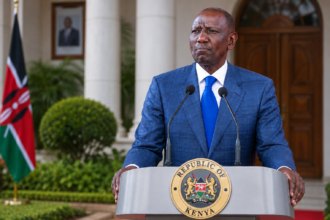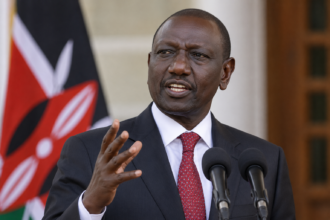


Kenyan President William Ruto on Thursday strongly defended his administration’s decision to allow the United States to construct an Ebola quarantine facility in Kenya, declaring that rejecting the American request would make the country look “very inhuman,” according to reports by Reuters and Nation.Africa.
Speaking during a state visit to South Africa, Ruto maintained that his government is doing “the right thing” by honoring a direct request from U.S. President Donald Trump, according to Reuters. The comments mark the president’s most assertive defense yet of the controversial 50-bed isolation unit being built at Laikipia Air Base in Nanyuki, according to reports from Al Jazeera and Citizen Digital. Satellite imagery confirms that the U.S. military is moving rapidly with construction despite Kenyan high court orders explicitly blocking the project, according to Reuters.
The bilateral agreement has triggered severe domestic backlash, including street protests in Laikipia County that resulted in two deaths earlier this week, according to Nation.Africa. Local civil society groups, opposition leaders, and medical unions have lambasted the deal, accusing the government of turning Kenya into an offshore containment ward for American citizens and healthcare workers exposed to the Bundibugyo Ebola virus strain in Central Africa, according to reports by Al Jazeera and the BBC.
Ruto dismissed these public anxieties, emphasizing that the U.S. government has historically deployed billions of shillings to support Kenya’s domestic health architecture, including funding for HIV/AIDS, COVID-19, and medical research, according to Citizen Digital. He stated that the facility is not unique but rather forms part of a broader national preparedness network comprising 23 similar isolation nodes across the country, according to Citizen Digital.
The political standoff continues to escalate in Nairobi. Kenyan Defense Cabinet Secretary Aden Duale stated before parliament that the executive branch would not consult the public on the military installation, according to Nation.Africa. Concurrently, legal representatives for the Katiba Institute maintain that continuing construction directly violates the ongoing High Court conservatory injunction, according to Citizen Digital.