

Somalia is navigating a critical and highly polarized political transition as the federal government attempts to permanently dismantle its decades-old, clan-based indirect voting system in favor of a universal suffrage model.
The aggressive push for a “one person, one vote” framework has triggered severe domestic gridlock, with regional leaders and opposition coalitions boycotting the reforms over what they term a unilateral consolidation of power by the federal administration.
For decades, Somalia has relied on the traditional “4.5 formula,” a power-sharing matrix that allocates equal legislative representation to the four major Somali clan families and a half-share to minority groups. Under this indirect system, selected clan elders appoint the 275 members of the federal parliament, who then vote to elect the president.
The government has gradually attempted to expand this voting pool. In 2016, participation was widened to allow 51 clan delegates per lawmaker, which was subsequently increased to 101 selectors during the 2022 election cycle.
The current federal administration, led by President Hassan Sheikh Mohamud, is pushing for a total transition to full direct democracy. While the government successfully implemented local universal suffrage trials in Mogadishu and parts of South West State, scaling the model to national parliamentary and presidential polling remains a massive structural challenge.
The immediate flashpoint of the political crisis centers on a controversial constitutional overhaul passed by the federal parliament. The amendment unilaterally extended the official four-year mandates of both the president and parliament by an additional year, a move the administration defended as a operational necessity to finalize direct voter registration pipelines.
However, the political calendar has officially lapsed without a nationwide vote, plunging the federal architecture into a severe crisis of legitimacy. A prominent opposition coalition, the Somali Salvation Forum, alongside the independent subnational leadership of Puntland and Jubaland, has completely rejected the central government’s unilateral reforms.
Critics argue the centralized electoral updates and mandate extensions are a calculated maneuver to favor the current administration’s re-election prospects. The impasse has previously boiled over into brief factional street violence in the capital, raising fears that pushing the reforms forward without an inclusive political settlement could trigger wider regional instability.
By The Numbers
The shifting mechanics of Somalia’s historical transition away from indirect appointments show a steady expansion of the national voter framework:
- Parliamentary Seats: 275 legislative members
- Historical Clan Matrix: 4.5 system giving fractional representation to minority groups
- 2016 Reform Pool: 51 selected clan representatives per lawmaker
- 2022 Reform Pool: 101 designated clan selectors per lawmaker
- Current Objective: 100% universal suffrage via a “one person, one vote” model
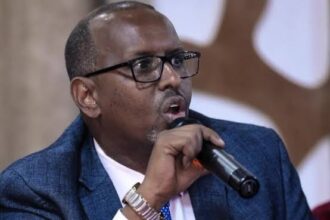
Despite the ongoing domestic gridlock, the federal government has publicly doubled down on its position. In a recent address at a diplomatic panel, state ministers urged opposition figures to choose the ballot box over armed conflict, emphasizing that establishing a direct democratic system remains the state’s firm long-term priority. [1, 2, 4]