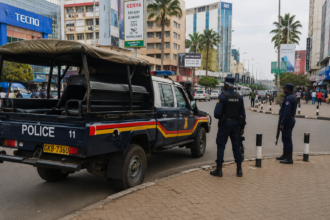


Kenya’s fuel regulator said in a letter that oil companies supplying extra volumes would qualify for advance sales compensation, Kenyans.co.ke reported, while independent dealers warned of product stock-outs.
The Energy and Petroleum Regulatory Authority (EPRA) letter and a joint statement from two dealers’ associations are both dated Tuesday, Oct. 27. Both follow the fuel price increase that took effect on Oct. 15.
What the EPRA letter says
Kenyans.co.ke reported that a letter from EPRA Director General Edward Mwirigi Kinyua said oil marketing companies that draw volumes above those factored into the current and next pricing cycles would qualify for compensation.
The letter said “the excess volumes will be due for advance sales compensation,” according to the outlet.
The compensation is meant to offset the “price lag,” the gap between supply costs and the prices used in the monthly review, the outlet reported. Excess volumes and incremental costs are handled first-in, first-out and verified against Kenya Revenue Authority data.
What the dealers said
The Petroleum Outlets Association of Kenya (POAK) and KIPEDA issued a joint statement on Oct. 27, Kenyans.co.ke reported in a separate article. They advised independent operators to immediately suspend purchases from suppliers charging above gazetted wholesale limits.
The groups said overcharging has persisted since Oct. 15. They called on EPRA and the State Department for Petroleum to act. Independent stations nationwide face “critical product stock-outs,” the groups said.
The dealers said their earlier complaints to EPRA and the Ministry of Energy had not produced results, Kenyans.co.ke reported.
Some stations may close or operate at severe losses, the groups said. Kenyans.co.ke also reported that the price stabilisation mechanism was suspended.
How the October review changed prices
The Oct. 14 review raised Nairobi prices for all three fuels, The Star reported. The table shows the previous price per litre and the increase, as reported by The Star, and the percentage rise calculated from them.
| Fuel | Previous price (Sh) | Increase (Sh) | Rise (%) |
|---|---|---|---|
| Super petrol | 214.03 | 12.93 | 6.04 |
| Diesel | 217.86 | 9.90 | 4.54 |
| Kerosene | 191.36 | 28.49 | 14.89 |
Kerosene rose by the most, Sh28.49 against Sh12.93 for petrol and Sh9.90 for diesel. In percentage terms the rise was 14.89% for kerosene, 6.04% for petrol and 4.54% for diesel. The new rates took effect on Oct. 15. The cycle runs from Oct. 15 to Nov. 14, The Star reported.
The Star reported that the rise was attributed to the Middle East conflict, disrupted supply chains and higher import costs.
Citizen reported that the landed cost of petrol per cubic metre rose from $874.26 to $977.55 between August and September, an increase of 11.81%. Diesel rose from $957.05 to $1,065.38 (11.32%) and kerosene from $1,003.87 to $1,098.31 (9.41%).
Citizen Digital reported that EPRA Director General Edward Mwirigi Kinyua said part of the kerosene increase aimed to narrow its gap with petrol and diesel, a gap he said encourages dealers to adulterate those fuels.
What advance sales compensation and price lag mean
EPRA sets pump prices for a fixed period, which in the current cycle runs from Oct. 15 to Nov. 14, The Star reported. Kenyans.co.ke described the price lag as the gap between supply costs and the prices set in the monthly review.
Advance sales compensation is the term the letter uses for what is due to companies that draw volumes beyond those the review assumed.
The gap between wholesale caps and pump prices
The dealers’ complaint centres on gazetted wholesale limits. Kenyans.co.ke reported the Nairobi caps as Sh211.80 a litre for super petrol, Sh212.60 for diesel and Sh204.79 for kerosene. The table sets the maximum Nairobi wholesale prices reported by Kenyans.co.ke beside EPRA’s published Nairobi pump prices, in shillings per litre. The difference column shows the pump price minus the wholesale cap.
| Fuel | Nairobi wholesale cap | Nairobi pump price | Difference |
|---|---|---|---|
| Super petrol | 211.80 | 226.96 | 15.16 |
| Diesel | 212.60 | 227.76 | 15.16 |
| Kerosene | 204.79 | 219.87 | 15.08 |
The difference is about Sh15 a litre for each product. Dealers say suppliers have charged above the caps since Oct. 15.
The table shows EPRA’s published pump prices in five towns, in shillings per litre, according to EPRA’s Fuel Price Index.
| Town | Super petrol | Diesel | Kerosene |
|---|---|---|---|
| Nairobi | 226.96 | 227.76 | 219.87 |
| Mombasa | 223.81 | 224.71 | 216.71 |
| Nakuru | 225.73 | 226.93 | 219.06 |
| Eldoret | 226.51 | 227.71 | 219.83 |
| Kisumu | 226.51 | 227.71 | 219.83 |
Mombasa has the lowest prices of the five towns listed, about Sh3 a litre below Nairobi, while Eldoret and Kisumu are less than Sh1 below the capital. Super petrol costs Sh223.81 a litre in Mombasa and Sh226.96 in Nairobi, according to EPRA’s published figures.
What is not yet clear
It was not clear how many companies would qualify or whether the compensation would change pump prices.
Fuel prices and supply have drawn attention before this year. Guled Gurey reported on EPRA’s May price review and shortages, and on the matatu fare increase and strike over the fuel crisis.
What happens next
The current price cycle runs to Nov. 14. The pump prices EPRA lists remain in force until then.